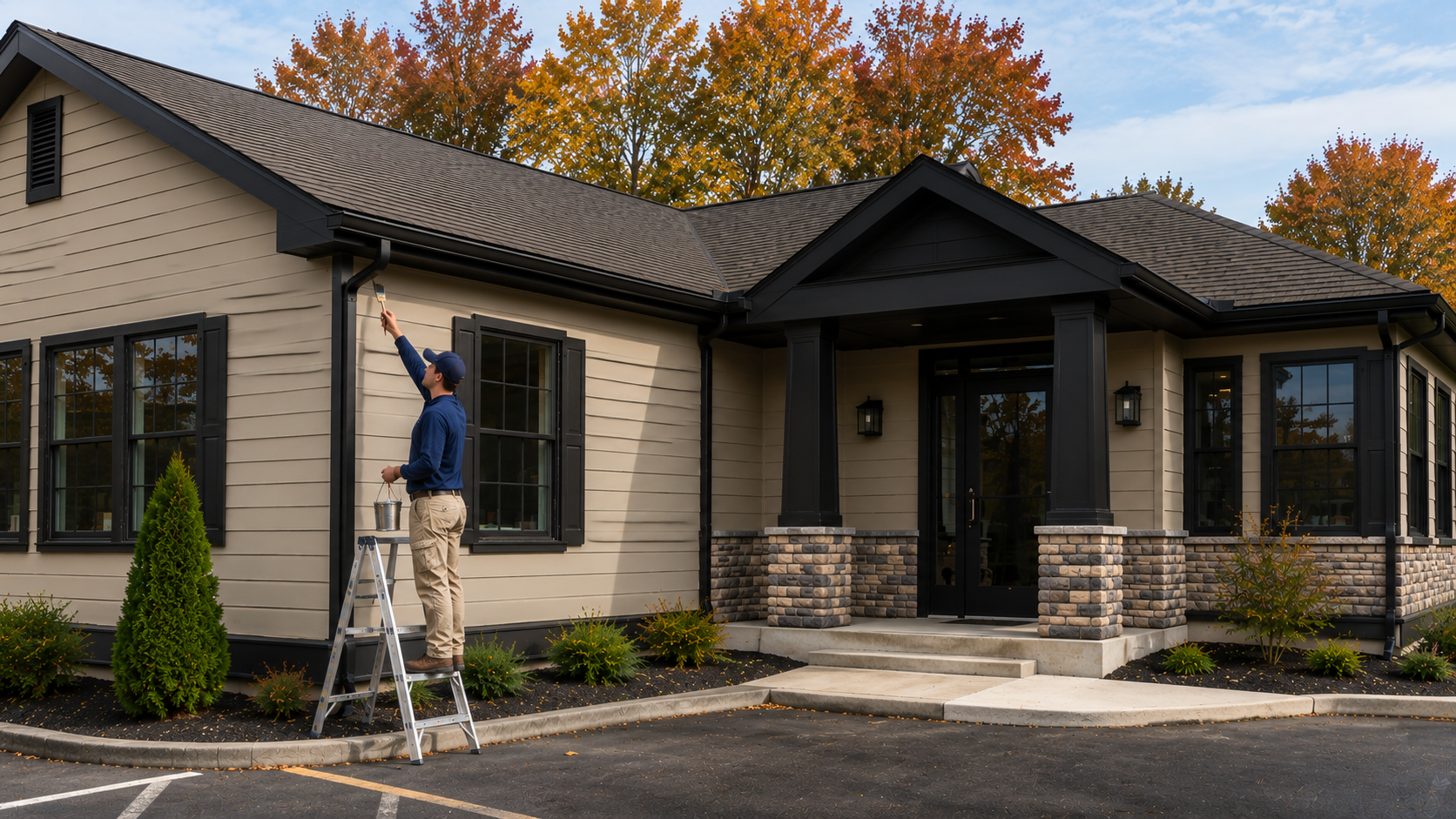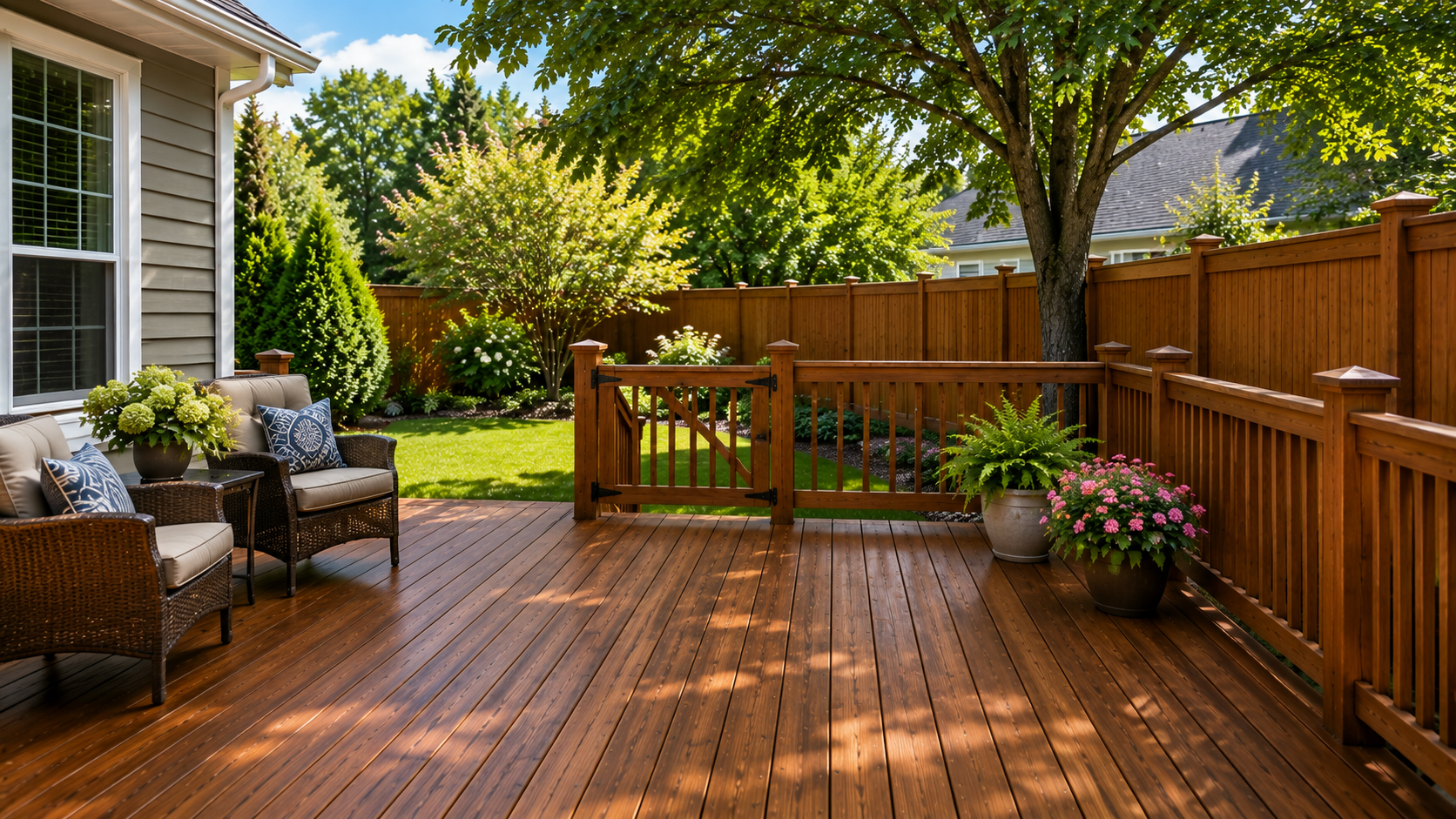

We’re already midway through summer in Western Mass, and you may be asking yourself if it is too late to stain your deck or fence. Maybe the deck is looking gray, the boards feel rough under your feet, or the fence has faded more than you realized. The good news is that summer is actually one of the best times to stain a deck in New England, as long as the wood is dry and the weather gives the stain enough time to cure.
Deck and fence staining is not just about making the wood look nicer. Around here, it helps protect against sun, rain, snow, mildew, and freeze-thaw damage. A well-stained deck can hold up much better through New England weather, while untreated or worn wood can dry out, crack, splinter, and start taking on water.
Best Time to Stain a Deck or Fence
The best time to stain a deck or fence is when the weather is warm, steady, and dry. Most stain products need temperatures somewhere around 50 to 85 degrees, low humidity, and no rain for at least a day or two before and after the work. The wood also needs to be dry enough to absorb the stain. If it is still holding moisture from rain, washing, or damp mornings, the stain will not soak in the way it should.
In Western MA and Hartford County, the main staining window usually runs from late May through early October. June through September is often the sweet spot. July can be a great month because we usually get longer dry stretches and warmer nights, but you still have to watch the direct midday sun. If stain dries too fast on the surface, it may not penetrate evenly.
That is why timing the day matters just as much as picking the right month. A deck in full sun in Agawam may need a different schedule than a shaded fence in Longmeadow. Pros often work around shade, sun exposure, humidity, and how the wood is drying. If you wait too deep into fall, cool nights and wet mornings can make it harder for the stain to cure before winter. For homeowners planning exterior work in general, this also ties into
when’s the earliest you can paint outside in spring.
Stain vs. Paint for Decks and Fences
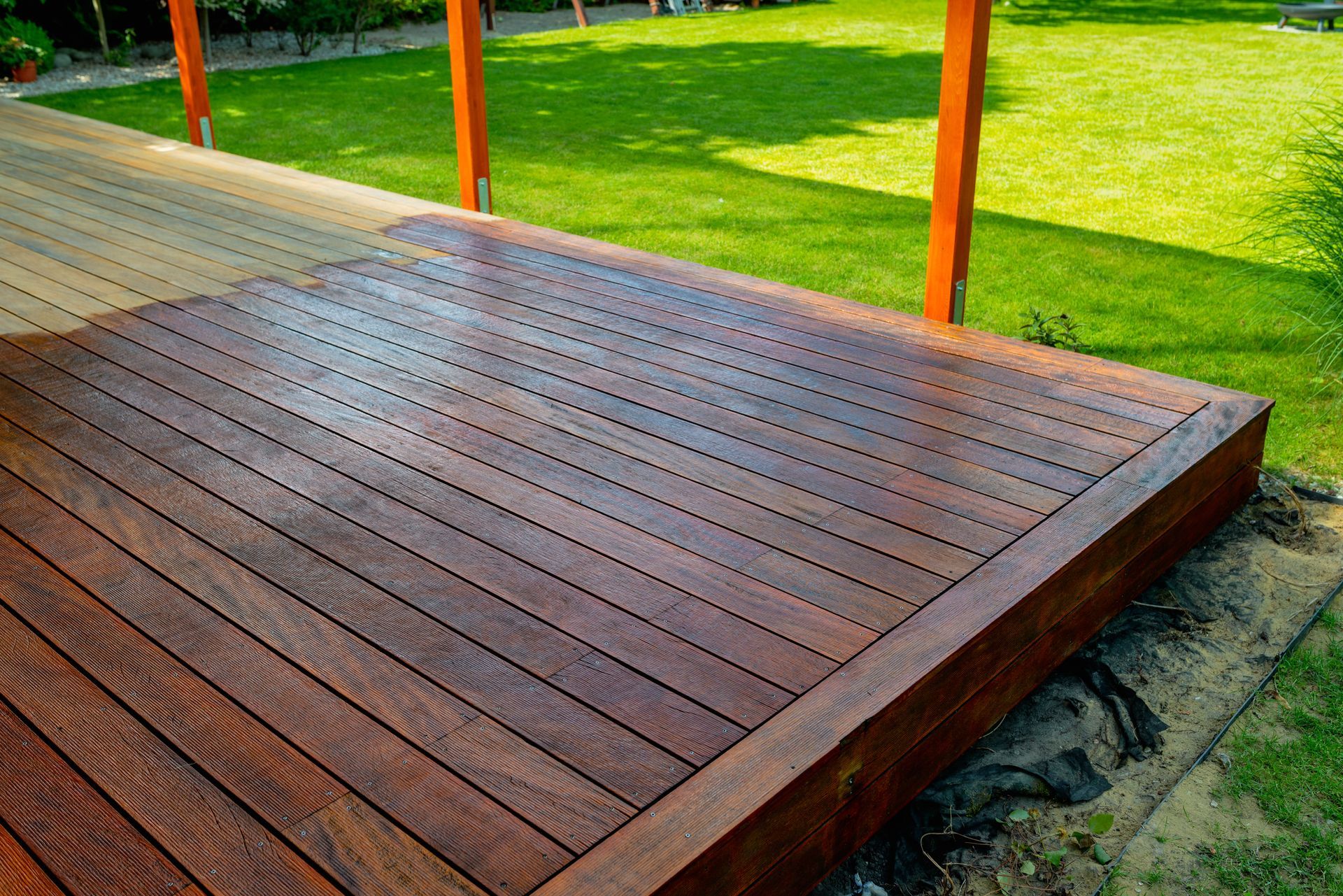
Stain and paint are not the same, especially on a deck. Stain soaks into the wood and lets some of the grain show through. Paint sits more on top of the surface and creates a film. That can work on some vertical surfaces, but it usually is not the best choice for deck boards that get foot traffic, standing water, snow, and ice.
For decks, stain is usually the safer choice because it moves better with the wood and is easier to maintain over time. Fences are a little more flexible. Some homeowners stain a fence to keep a natural wood look, while others paint it for a solid color. The right choice depends on the wood, the condition, the look you want, and how much upkeep you are comfortable with.
There are also different stain options. Transparent stain shows the most grain but usually needs more frequent maintenance. Semi-transparent stain is often a good fit for New England because it gives you some natural wood character with better protection. Solid stain gives the most coverage and has a more paint-like look, which can be helpful for older wood or fences that need a cleaner, more uniform finish.
How Long Deck and Fence Stain Lasts
Most deck stain does not last forever, especially in New England. As a rough guide, transparent stain may last about 1 to 2 years, semi-transparent stain may last about 2 to 4 years, and solid stain may last about 4 to 7 years on deck boards. Fences often last longer because the boards are vertical and shed water better than a flat deck surface.
Weather is the big reason those timelines can be shorter here. Snow sits on deck boards. Ice expands in small cracks. Summer sun fades exposed areas. Humidity and shade can lead to mildew. A deck in full sun in Westfield may fade faster, while a shaded deck in Wilbraham may stay damp longer and need more cleaning.
You can usually tell when the wood is ready for attention. If water no longer beads on the surface, the boards are turning gray, mildew spots are spreading, or the wood feels rough and splintery, it may be time to restain. Prep makes a big difference too. Washing, sanding, and giving the wood enough dry time can make the stain last much longer than a rushed weekend job.
What Professional Deck and Fence Staining Includes
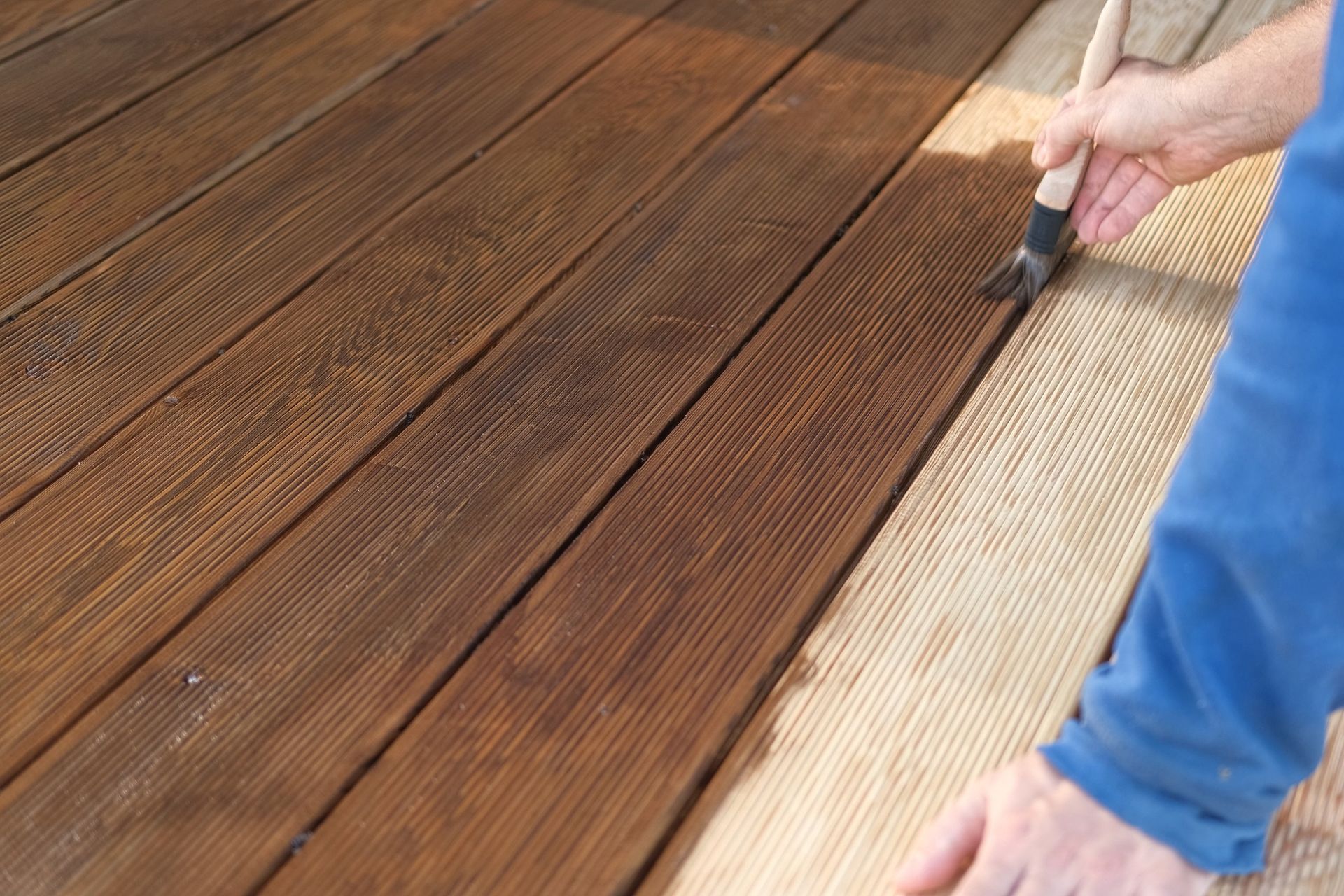
A good stain job is mostly prep. The staining is the part you see at the end, but the work before that is what helps the finish last. When Pioneer Painters stains decks and fences in Western MA or Hartford County, the goal is to get the wood clean, dry, smooth, and ready before any product goes on.
A professional deck or fence staining project may include:
- checking for rot, loose boards, popped nails, screws, or damaged wood
- power washing to remove dirt, mildew, gray fibers, and old failed stain
- sanding rough or splintered areas so the stain absorbs more evenly
- making sure the wood is fully dry before staining begins
- protecting siding, landscaping, patios, walkways, and nearby surfaces
- choosing the right stain for the wood type, age, and sun exposure
- applying the stain based on product guidelines
- cleaning up and walking through the finished work
This matters even more with pressure-treated lumber, cedar, older deck boards, and fences that have gone a few seasons without maintenance. If the wood is stained before it is ready, the finish can look uneven, wear quickly, or fail before it should.
Common Deck and Fence Staining Mistakes
Staining Wood Before It Is Dry
Stain needs dry wood to absorb the right way. If the deck is still damp from rain, power washing, heavy humidity, or morning dew, the stain may sit on top instead of soaking in. That can lead to blotchy color and a finish that wears out faster.
Applying Stain in Direct Hot Sun
Hot midday sun can make stain dry too fast. When that happens, it may flash dry on the surface before it has time to penetrate the wood. This can leave uneven color, lap marks, and weak protection.
Skipping Prep Work
Stain will not fix mildew, dirt, gray wood fibers, or loose old coating. Those things need to be cleaned or sanded first. Skipping prep is one of the biggest reasons deck stain fails early.
Choosing the Wrong Stain Type
Transparent, semi-transparent, solid stain, and paint all behave differently. A newer cedar fence in Suffield CT may not need the same product as an older pressure-treated deck in Springfield. The right choice depends on the wood, sun exposure, previous coating, and the look you want.
Waiting Too Long in the Season
Late fall staining can be risky in New England. Cool nights, damp mornings, and shorter dry windows make curing harder. If your deck or fence already looks gray or worn in July, it is better to get it looked at before the season starts closing.
Is It Worth Hiring a Pro?
A small, newer deck in good shape can be a fair weekend project for a handy homeowner. If the boards are clean, dry, smooth, and easy to reach, DIY staining may be doable. The trouble starts when the deck has mildew, old stain, rough boards, peeling areas, railings, stairs, or uneven weathering.
Failed DIY stain is usually caused by bad timing, damp wood, skipped prep, or the wrong product. Fixing that later can take more work than doing it right the first time. For larger decks, older fences, or homes where you are already planning exterior painting, hiring a pro can save time and help the finish hold up better.
Many homeowners also bundle deck or fence staining with other residential painting services. If the crew and equipment are already on site, it can be a smart time to refresh the deck, fence, trim, or other exterior wood areas. If you are planning a bigger seasonal project, our exterior painting cost guide can also help you budget.
Book Deck or Fence Staining in Western MA or Hartford County
The biggest limit with deck and fence staining is the calendar. Summer is a strong window, but the best staining weather does not last forever. Once early fall brings cooler nights and damp mornings, it gets harder to get the right drying and curing conditions.
Pioneer Painters serves Longmeadow, Springfield, Wilbraham, Westfield, Agawam, Enfield CT, Suffield CT, Granby CT, and nearby Western MA and Hartford County towns. Call (413) 798-4088 or request a free estimate online to talk about deck staining, fence staining, or pairing the work with your next exterior painting project.
Recent Blogs