
You may still like your kitchen layout, but the cabinets are starting to look outdated. Maybe the color doesn't match the rest of the room anymore, or the finish has worn down around the handles and doors. Replacing everything feels like a big project, especially when you're mainly looking to change how the kitchen looks.
That's where kitchen cabinet painting comes in. A new coat of paint can give existing cabinets a different appearance without replacing them. For homeowners considering kitchen cabinet painting in Western MA, it helps to understand when painting makes sense, what goes into a quality finish, and why the preparation matters just as much as the paint itself.
Should You Paint or Replace Your Kitchen Cabinets?
If you're happy with your kitchen's current layout but want a different look, painting may be a good alternative to replacing your cabinets. Instead of removing the existing cabinetry, you keep what's already there and update the color and finish. This gives homeowners an option when they want to refresh the kitchen without taking on a larger replacement project.
The decision also depends on the condition of your cabinets. Painting changes the surface, but it doesn't mean every set of cabinets is a good candidate. Before deciding to paint or replace kitchen cabinets, it's worth having their condition looked at and discussing what kind of result you're hoping to achieve. Pioneer Painters offers cabinet painting services and can help homeowners explore whether painting is appropriate for their project.
Cabinet painting isn't limited to kitchens, either. Pioneer Painters also works on bathroom vanities, built-in cabinets, and cabinet doors and drawer fronts. These smaller projects can be useful when you want to update a bathroom or another part of your home without changing the existing cabinetry.
Choosing the Right Cabinet Color & Finish
Cabinet color has a big effect on how a kitchen looks, especially because the cabinets take up so much visible space. White and other neutral shades remain popular choices because they work with many different styles. White can also help a smaller kitchen feel brighter, while darker colors create more contrast. Some homeowners choose two-tone cabinets, such as darker lower cabinets with lighter upper cabinets, to add variety without changing the entire kitchen.
Before settling on a color, look at how it works with the rest of the room. Countertops, backsplash, flooring, and wall colors all influence the final appearance. A shade that looks good on a small sample may feel different once it's covering every cabinet door. Checking samples at different times of day can help you see how natural and indoor lighting affect the color. For more ideas, Pioneer's guide to kitchen cabinet colors offers examples of different combinations.
The paint's sheen matters too. Sheen refers to how much light reflects off the painted surface. Kitchens deal with cooking splashes, moisture, and regular cleaning, so the finish needs to be practical as well as attractive. Satin is a common choice, while semi-gloss provides additional durability and is easier to wipe clean. Pioneer Painters also offers help with color selection, making it easier to narrow down the options for your home.
Why Preparation Matters Before Painting Cabinets
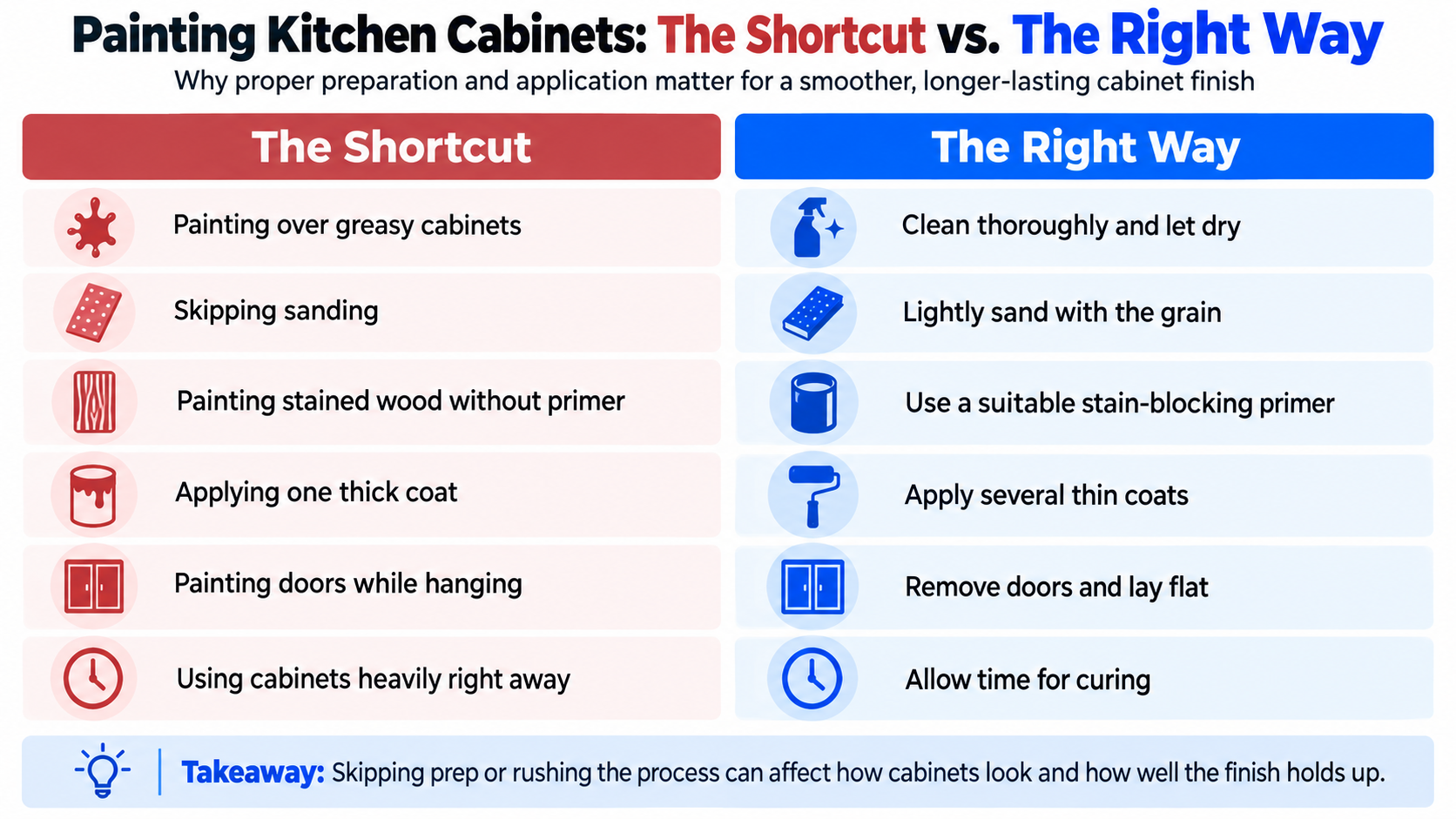
Cabinet painting starts well before the first coat goes on. Kitchen cabinets collect grease, dust, and cooking residue, particularly around handles and frequently used doors. Even when a surface looks clean, leftover oils can prevent paint from sticking properly. That's why cleaning is an important first step. The surface needs to be free of grease and dirt and allowed to dry before the next part of the process.
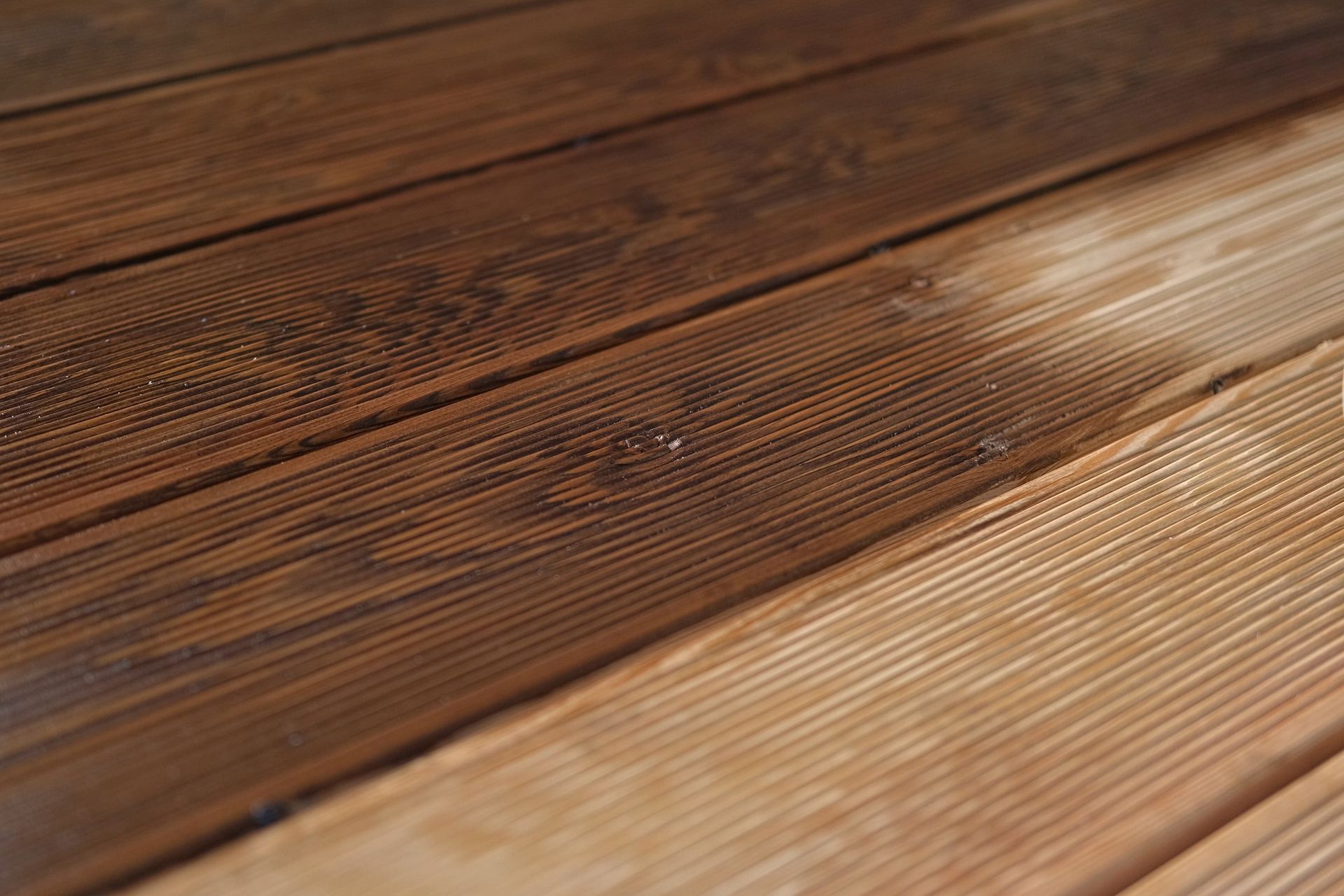
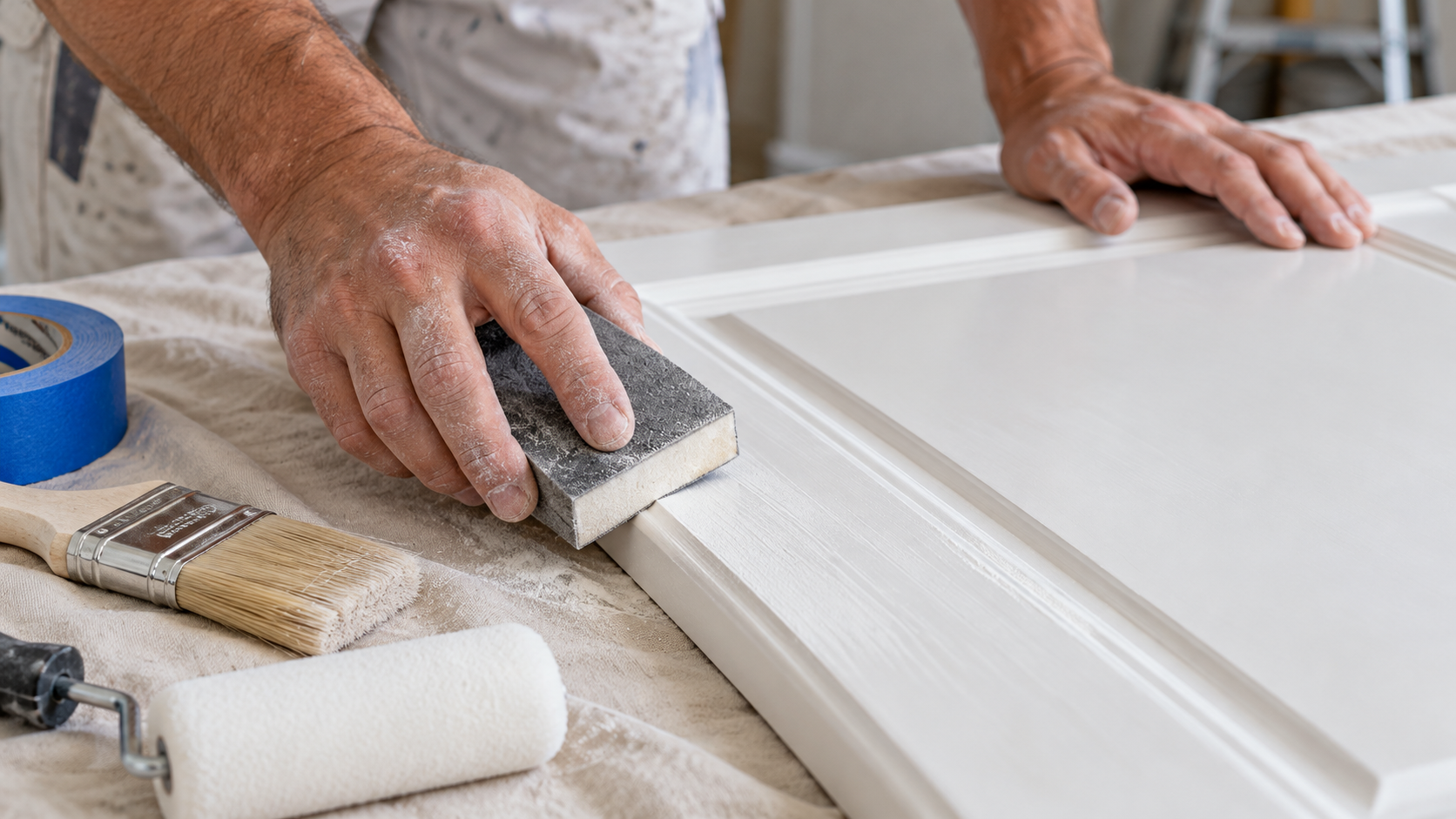
Sanding helps prepare the existing finish for paint. This is especially important when painting stained wood cabinets, since glossy or sealed surfaces can make it difficult for new paint to bond. Light sanding with fine-grit sandpaper helps create a surface the paint can grip without needing to remove all the original stain. After sanding, the remaining dust needs to be cleaned away before primer is applied. Pioneer explains these steps further in its article about painting over stained wood.
Primer also plays an important role, particularly with older stained cabinetry. Some stains can show through new paint, even after several coats. A suitable stain-blocking primer helps prevent this problem and prepares the surface for painting. Without proper cleaning, sanding, and priming, the finished cabinets may develop peeling, chipping, or uneven coverage. Taking care of these steps early helps create a finish that can better handle everyday use.
How Cabinets Are Painted for a Smooth, Even Finish
Once the cabinets have been prepared, the way paint is applied makes a difference in the final appearance. Several thin coats generally provide a more even result than trying to cover everything with one heavy coat. Each layer needs time to dry before the next is applied. Removing cabinet doors and laying them flat is another technique used when painting wood surfaces, helping the paint go on more evenly across the door.
The tools used also affect how the finish looks. Spraying can create a smooth surface without visible brush strokes, although it requires careful masking to protect nearby areas from overspray. Brushing creates a different appearance, with more noticeable texture. Pioneer Painters discusses these differences in its guide to spray painting versus brush painting and selects painting methods based on the needs of each project. Not every cabinet job requires the same application method.
Another detail homeowners should understand is the difference between paint drying and curing. Paint may feel dry to the touch long before it reaches its final hardness. Depending on the product and conditions, latex paint can take 2–3 weeks to fully cure, while some oil-based products may take up to 30 days. Temperature, humidity, and airflow can also affect drying times. Being careful with freshly painted surfaces during this period helps avoid unnecessary marks or damage before the finish has fully cured.
Why Painting Kitchen Cabinets Yourself Can Be Difficult
Painting cabinets may seem straightforward at first. You choose a color, pick up the paint, and get started. But once the project is underway, there's more to manage than expected. Cabinet doors have edges, corners, and detailed areas that need careful attention. Because they're opened, closed, and touched throughout the day, uneven coverage and missed spots can become noticeable.
One of the biggest challenges with DIY cabinet painting is getting a consistent finish. Brush strokes, roller marks, and uneven coverage can leave the finished cabinets looking different from what you pictured. Preparation also takes time, and skipping steps to finish faster may lead to peeling or chipping later. Pioneer Painters discusses these concerns in its article about DIY versus professional painting, including how tools, additional paint, and correcting mistakes can add to the project.
Working with a professional painting company can help homeowners avoid having to manage the process themselves. Pioneer Painters is locally owned, licensed, and insured, with a team trained in painting methods and surface preparation. From preparing the cabinets to applying the final coats, having the work managed from beginning to end helps keep attention on the details that matter to the finished result.
What to Expect When Getting a Cabinet Painting Estimate
A cabinet painting project begins with understanding what you want to change. Pioneer Painters offers a free in-home consultation where homeowners can discuss their goals, consider colors, and review the details of the work. Color consultants can help with choosing a finish that works with the existing kitchen. After the project details are established, Pioneer provides a printed quote outlining labor, materials, pricing, and work specifications.
Scheduling is another part of the process worth planning for. According to Pioneer's published FAQ, work typically begins 1–3 months after receiving a quote, once the colors, specifications, and contract have been confirmed. The actual schedule depends on the project and the company's availability, so it's worth discussing timing during the consultation rather than assuming work can begin immediately.
Before the project starts, homeowners can also ask what needs to be prepared or moved in the kitchen. This is a good opportunity to review the work area, painting process, and any questions about materials or finishes. Pioneer Painters manages its projects through completion and cleans up when the work is finished, helping homeowners know what to expect from the process.
Get a Free Cabinet Painting Estimate
If you like your existing cabinets but want to update their appearance, professional cabinet painting may be worth considering. Pioneer Painters provides cabinet painting in Longmeadow, MA, and serves homeowners throughout Hampden County and nearby Hartford County, Connecticut, including Springfield, East Longmeadow, Wilbraham, Agawam, Enfield, and Suffield.
To discuss your kitchen cabinets or another painting project, contact Pioneer Painters for a free estimate. Call (413) 798-4088 or Request a Quote to get started.
Recent Blogs